Es geht auch anders
Marta Djourina, Frank Mädler
Exhibition text for the exhibition "Es geht auch anders" at Villa Heike
25.01.2025
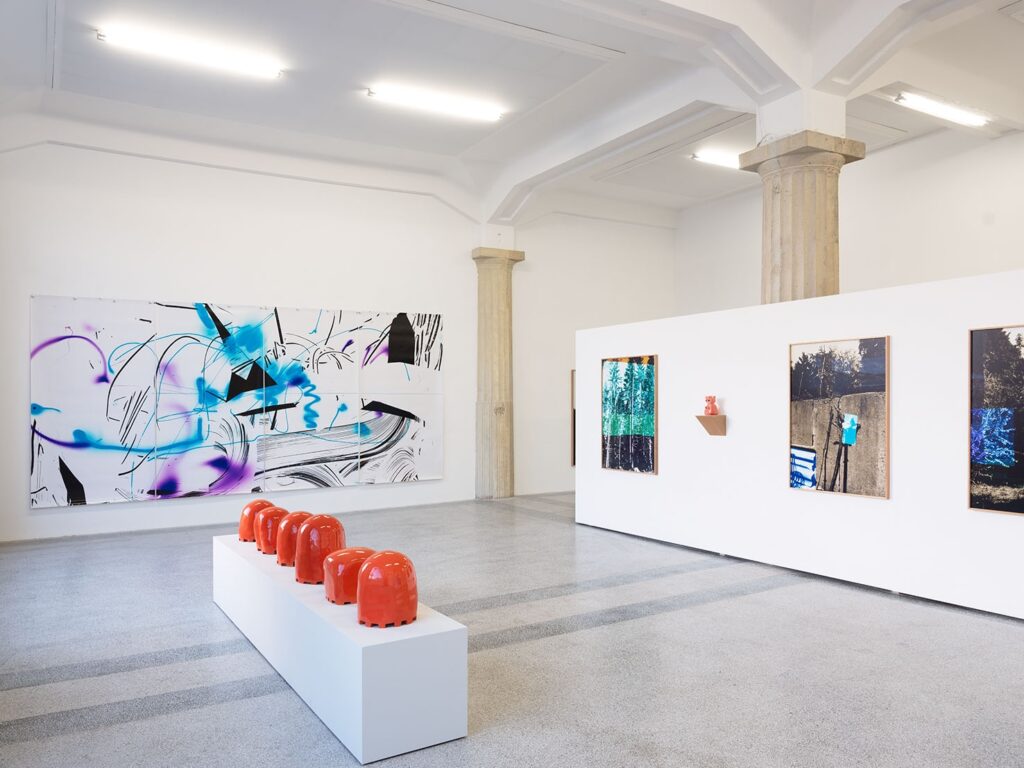
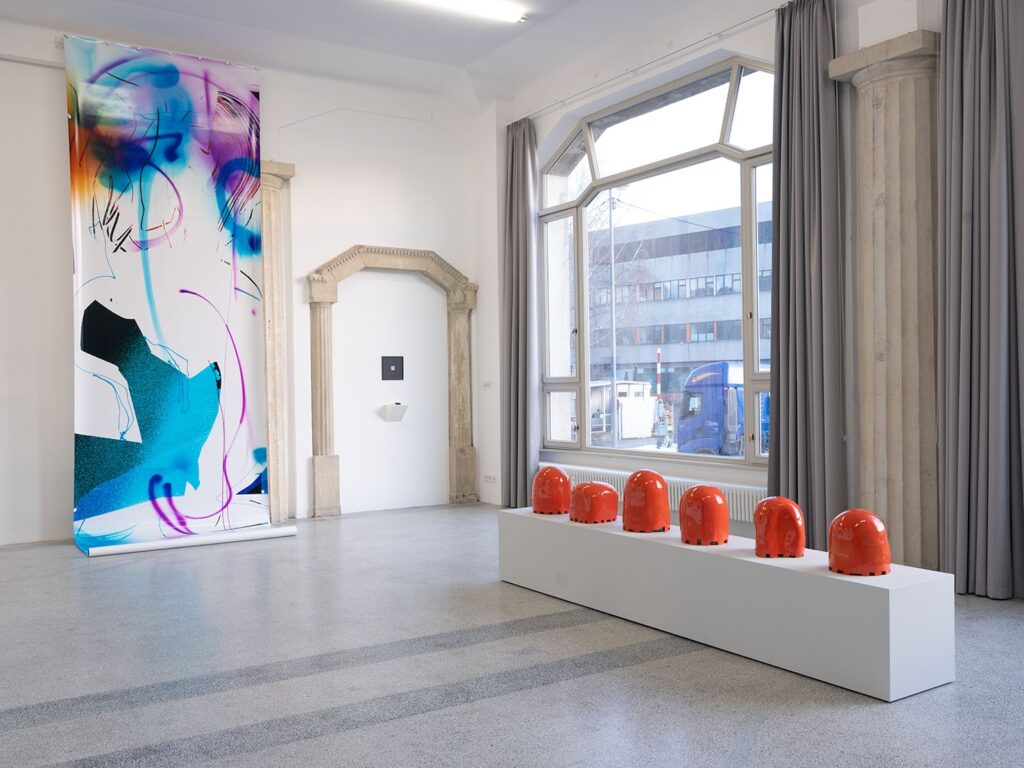
In Es geht auch anders, control becomes both a tool of structure and intention. Its poetic counterforce lies in the act of relinquishing control, allowing the unexpected to seep in and transform into something unforeseen. The exhibition shows the works of Marta Djourina and Frank Mädler, whose works oscillate between control and chaos - not as opposing forces, but as interwoven elements.
Djourina’s photogrammetry-based practice explores abstraction and gesture. Her works emerge through a process that is both performative and mechanical, using her moving body to generate shapes and forms. In this process, control and its release are crucial in shaping the final outcome. While the works rely on an active interplay of light and shadow, Djourina’s artistic research into variables like light intensity, exposure time, material opacity and movement influences the result. Through this controlled uncertainty, she pushes the limitations of compositional control, inviting unpredictability to influence her practice.
Frank Mädler's photographic works entail an inherent unpredictability of light, movement and subjectivity that makes it impossible to fully foresee the outcome. Added scratchy lines, painted surfaces or fractured structures interrupt the still landscapes and create a poetic dialogue between perception, form-finding and organic imperfection. Mädler's works thereby blur the boundary between object and abstraction and transform the image into an interplay of colour, form and shape. With his sculptures, he expands this practice, in which the abstraction of form unfolds into a process of image invention.
Both artist practices are rooted in simplicity and unpredictability, guided by intuition and chance. It is in the delicate balance between holding on and letting go that unexpected forms and associations emerge. In a time when machines increasingly challenge notions of control, the exhibition highlights the collaboration between human intention and machine autonomy, between control and unpredictability. Es geht auch anders emphasises the liminal space where these forces coexist, underlining the role of time and unpredictability in artistic processes of control.